What Causes Heart Disease in Cats? Risk Factors (Vet Verified)

Heart problems can be hard to detect in cats, as they are predisposed to masking them. But how and why do they come to be, exactly? In this article we’ll dive into what causes heart disease in cats, but also what the most common risk factors are, whether you can prevent it, why early detection is the most important factor, and what you can do to help.
What Causes Heart Disease in Cats?
Heart disease in cats is most commonly caused by genetics, with hypertrophic cardiomyopathy (HCM) being the leading form. Other causes include underlying conditions like hyperthyroidism and high blood pressure, nutritional deficiencies, and rarely congenital defects present at birth. Because many cases develop silently, understanding what causes heart disease in cats is the first step toward catching it early.
Key Takeaways
- Hypertrophic cardiomyopathy (HCM) is the most common form of heart disease in cats, affecting up to 15% of the feline population.
- Genetics plays a major role certain breeds carry a significantly higher risk.
- Secondary causes include hyperthyroidism and hypertension, and taurine deficiency.
- Many cats show no symptoms until the disease is advanced.
- Early detection through continuous monitoring is the most powerful tool available to cat owners today.
What Causes Heart Disease in Cats, Explained
According to VCA Animal Hospitals, heart disease in cats falls into two broad categories: congenital (present from birth) and adult-onset (developing over time). The vast majority of cases are adult-onset, and the exact cause is often not fully understood.
The most common culprit is hypertrophic cardiomyopathy (HCM) a condition where the muscular walls of the left ventricle thicken, reducing the heart’s ability to pump blood efficiently. Cornell University College of Veterinary Medicine notes that HCM affects up to 15% of the feline population and echocardiography is considered the gold-standard diagnosis for feline cardiac disease.
Beyond HCM, other causes include:
- Restrictive cardiomyopathy (RCM): Scar tissue forms inside the heart muscle, making it rigid and limiting its ability to fill with blood.
- Dilated cardiomyopathy (DCM): The heart chambers enlarge and the walls thin, weakening pumping function. This form is rare in cats and often linked to a taurine deficiency in the diet.
- Secondary heart disease: Conditions like hyperthyroidism and high blood pressure place extra strain on the heart, sometimes leading to structural changes over time. VCA Animal Hospitals identifies these as among the most common primary problems contributing to acquired feline cardiac disease.
- Congenital heart defects: Valve malformations or holes in the cardiac septum are present from birth, though Cornell Vet notes these are relatively rare, occurring in only 1–2% of kittens.
What Are the Most Common Risk Factors?
Several well-established risk factors increase a cat’s likelihood of developing heart disease. Being aware of these can help you work more proactively with your vet and monitor your cat more closely using a cat health tracker.
- Genetics: The strongest predictor of HCM risk. Cornell’s cardiology team has identified mutations in the myosin binding protein C gene in Maine Coon and Ragdoll cats evidence of a heritable component in these breeds.
- Age: Most forms of heart disease are diagnosed in middle-aged to older cats, though HCM has been detected in cats as young as 4 months old.
- Sex: Male cats are more commonly affected by cardiomyopathy than females, according to Cornell Feline Health Center.
- Underlying illness: Hyperthyroidism is one of the most common primary conditions that leads to cardiac complications in cats. Left untreated, the elevated metabolic demand on the heart can result in secondary HCM.
- Nutritional deficiency: Taurine is an essential amino acid for cats, and its absence in the diet is a known cause of dilated cardiomyopathy. Tufts University Cummings School of Veterinary Medicine specifically flags unbalanced homemade, vegetarian, or vegan diets as potential risk factors for taurine-deficient DCM.
“Every time Umi is hospitalized, it’s for like four days and it costs over $5,000… Maven has helped me not only save money but also save his life”
★★★★★
Jessica Ortiz
Umi
Are Some Cats More at Risk Than Others?
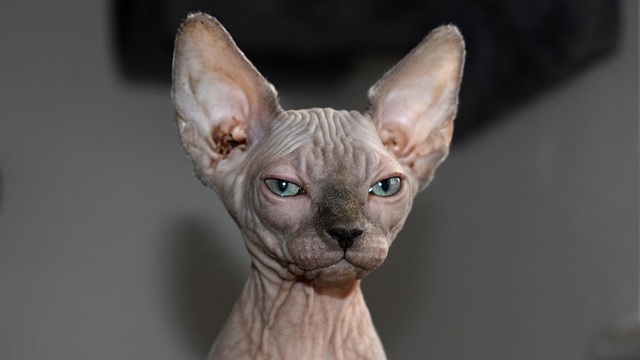
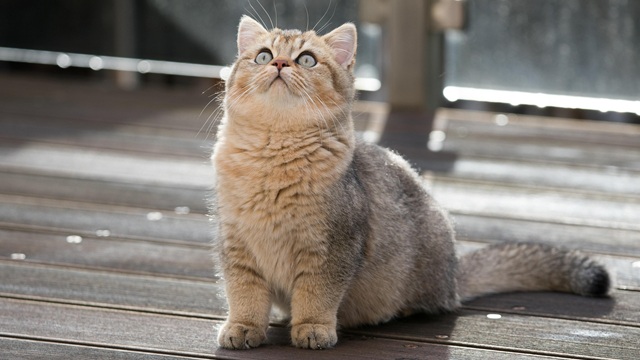
Yes significantly. While all cats can develop heart disease, certain breeds carry a much higher genetic predisposition. Cornell Vet’s HCM resource identifies the following breeds as particularly vulnerable: Maine Coon, Ragdoll, British Shorthair, American Shorthair, Sphynx, Bengal, Chartreux, Norwegian Forest, Siberian, and Persian cats.
Maine Coons carry an especially notable risk VCA Animal Hospitals reports that one study found approximately 33% of Maine Coon cats carry the relevant genetic mutation. That said, even mixed-breed cats are not immune. No cat should be considered low-risk simply because of their breed.
If you have a purebred cat with a known predisposition, it’s worth discussing genetic screening with your veterinarian and using a pet health tracker to establish a baseline early.
“Many forms of heart disease in cats are linked to genetics and can’t be fully prevented. That’s why early detection through monitoring changes like resting respiratory rate and activity is so important.” – Carolina Domingues, DVM, Veterinarian at Maven Pet
Can You Prevent Heart Disease in Cats?
For genetically driven heart disease the most common type full prevention is not possible. However, there are meaningful steps you can take to reduce risk and support your cat’s overall cardiovascular health. Here’s what the evidence supports on how to prevent heart disease in cats:
- Feed a complete, balanced diet: Ensure your cat’s food contains adequate taurine. Avoid relying on fish-only diets or unvalidated homemade recipes. VCA Animal Hospitals highlights taurine as essential for preventing dilated cardiomyopathy.
- Maintain a healthy body weight: Obesity increases cardiovascular strain. Regular play and portion control are both beneficial.
- Manage underlying conditions: Keeping hyperthyroidism and hypertension under control significantly reduces secondary cardiac risk.
- Schedule annual veterinary checkups: Cornell Vet recommends at minimum yearly heart auscultation for all cats, as it remains one of the most cost-effective early detection methods. Senior cats may benefit from more frequent visits.
Why Early Detection Matters More Than Prevention
Because so many cases of feline heart disease are genetic, the most impactful thing you can do for your cat isn’t necessarily to prevent disease it’s to catch it as early as possible.
Cornell’s cardiomyopathy overview notes that cats suffering from congestive heart failure typically show a resting respiratory rate above 35 breaths per minute well above the normal range of 15–30. Catching this elevation early, before obvious symptoms appear, can make an enormous difference in outcomes and quality of life.
Unlike dogs, cats rarely cough due to heart disease. They tend to quietly reduce activity levels and withdraw changes that are easy to miss without objective, consistent monitoring at home using a pet health app.
How Maven Helps
The Maven Pet Health Monitor is designed specifically to support early detection of heart disease in cats even before clinical signs are visible.

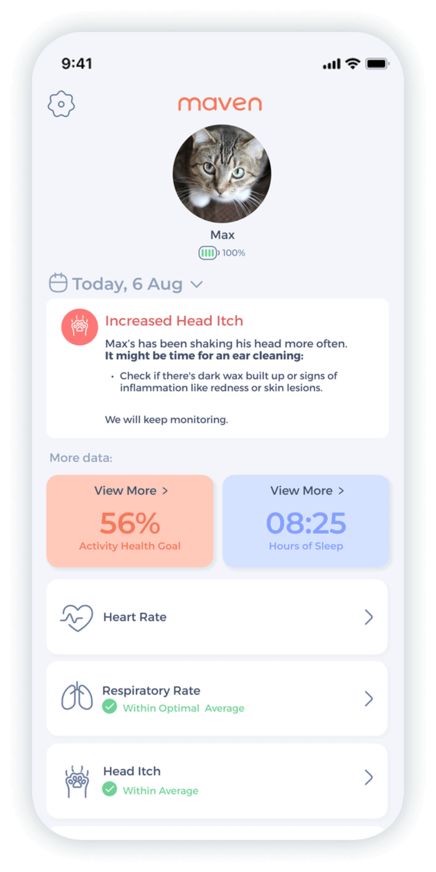
Monitor heart rate, respiratory rate, activity & rest, itch behavior.
Acting as a continuous cat heart rate tracker and behavioral monitor, Maven builds a personalized health baseline for each individual cat and sends alerts when key metrics shift.
- Tracks resting respiratory rate continuously, identifying early signs of cardiac stress
- Monitors heart rate trends to help detect abnormalities over time
- Measures activity and rest patterns, flagging subtle behavioral changes
- Builds a personalized baseline unique to your cat
- Sends alerts when deviations occur such as a rising resting respiratory rate so you can act before an emergency develops
FAQ (Vet-Reviewed)
The most common cause is genetics, particularly for hypertrophic cardiomyopathy (HCM). Secondary causes include hyperthyroidism, high blood pressure, and nutritional deficiencies such as low taurine. Rarely, cats are born with congenital heart defects.
Genetically driven heart disease cannot be fully prevented. However, feeding a complete and balanced diet, managing underlying conditions like hyperthyroidism, maintaining a healthy weight, and attending regular vet checkups can reduce risk and improve outcomes.
Yes. Maine Coon, Ragdoll, British Shorthair, Sphynx, Persian, and several other purebreds carry a higher genetic predisposition to HCM. Maine Coons are particularly high-risk, with some studies suggesting roughly a third carry the relevant gene mutation. That said, any cat can develop heart disease regardless of breed.
Feed a diet with adequate taurine, keep your cat at a healthy weight, manage any existing health conditions, and schedule at least annual vet visits. For high-risk breeds, ask your vet about genetic screening and consider using a cat health tracker to monitor respiratory and activity patterns at home.
Final Takeaways
- Heart disease in cats is most often caused by genetics, not lifestyle.
- Certain breeds particularly Maine Coons and Ragdolls face significantly higher risk.
- Secondary conditions like hyperthyroidism and taurine deficiency are also important contributors.
- Early detection through continuous monitoring is the most powerful tool available to catch early onset.
- Watch for subtle changes in breathing, activity levels, and behavior these are often the earliest signs.
Maven Pet focuses on improving the quality of life of our pets with technology, using artificial intelligence (AI) to enable proactive pet care. By accurately collecting and monitoring pet data 24/7 and flagging any irregularities, Maven Pet empowers pet parents and veterinarians to stay ahead of potential health issues, ensuring the well-being and longevity of our beloved companions.